Why Write Code Yourself
A gym works when you lift the weight. A coach can design the program, a friend can spot you, a video can show you form — but the only thing that grows your muscles is you moving the bar. Code is the same. The only way your brain learns to program is by typing the program. Watching someone else type it does nothing. Pasting what a machine wrote does less.
London cab drivers know this without knowing they know it. Since 1865 any driver who wants to work the black cabs has to pass a test called The Knowledge: 320 memorized routes across 25,000 streets. The exam takes 3 to 4 years of study on a scooter with a clipboard. In 2000 the neuroscientist Eleanor Maguire at University College London put a group of drivers in an MRI machine and found their hippocampus — the part of the brain that stores spatial memory — was larger than the rest of the population's. Their brains had thickened under the load. When GPS arrived and new drivers stopped memorizing, the thickening stopped showing up in the scans.
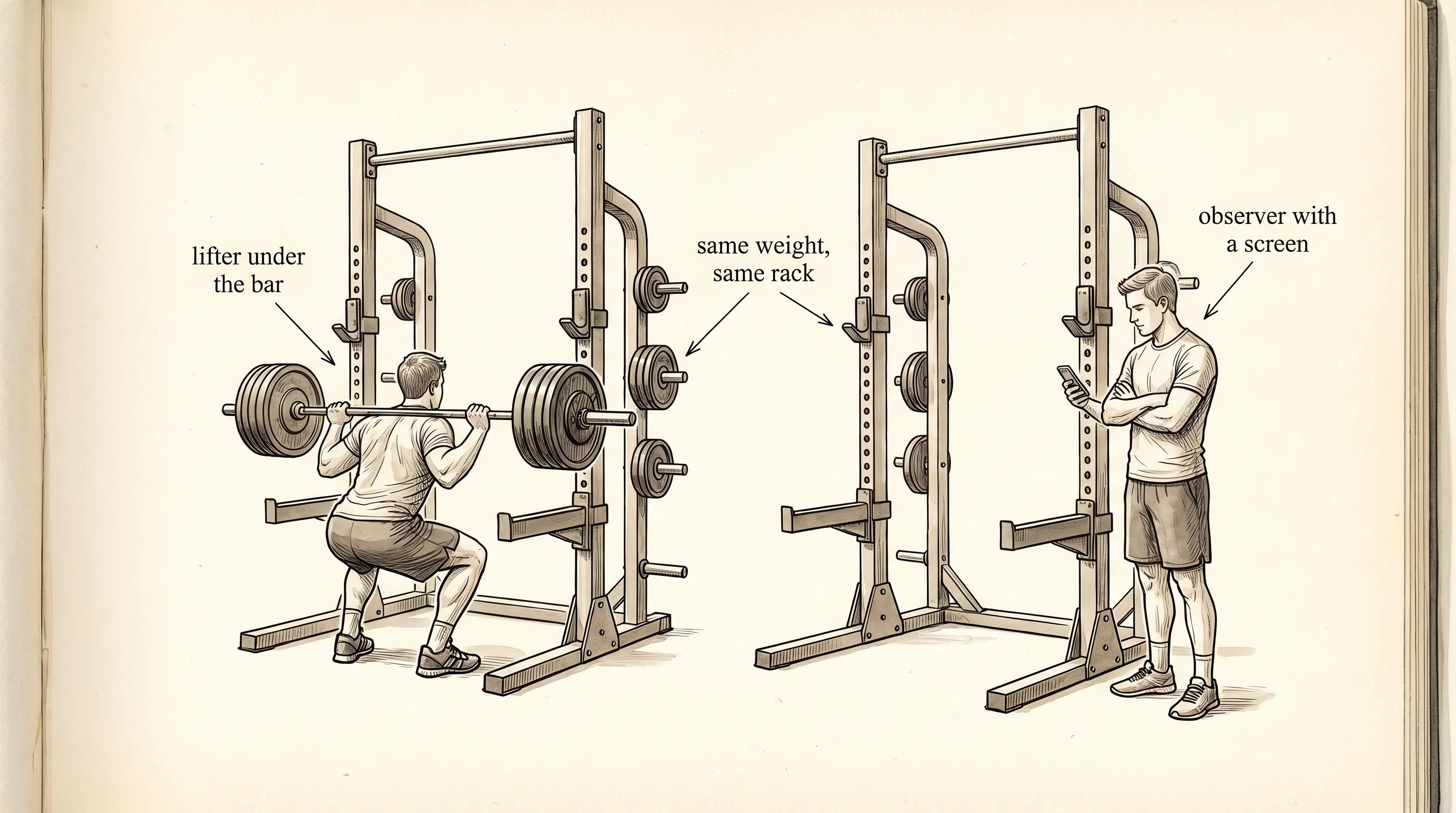
The pattern repeats for every cognitive tool. In 1972 Texas Instruments put pocket calculators in American classrooms for the first time. Within a decade teachers were reporting students who could not do 8 × 7 without a machine. The skill had not been killed by the calculator. It had been outsourced. In 2008 Stack Overflow launched and programmers started copying snippets without reading them. In 2021 GitHub Copilot shipped and a generation of engineers stopped typing their own loops. Each tool made someone faster. Each one also made someone weaker.
The research caught up to the street observation in 2025. Studies of AI-assisted developers kept finding the same shape: quicker on the first pass, shakier on a follow-up problem where the assistant was turned off. The developers had shipped the code. They had not learned it.
This is not an argument against the tools. A calculator is the right move when you are an accountant multiplying 7-digit numbers in a spreadsheet. A GPS is the right move when you are driving a truck across a country you have never seen. An LLM is the right move when you are a senior engineer pattern-matching your 10,000th CRUD endpoint. The tools pay off once the muscle is already built. They hollow you out when you reach for them before the muscle exists.
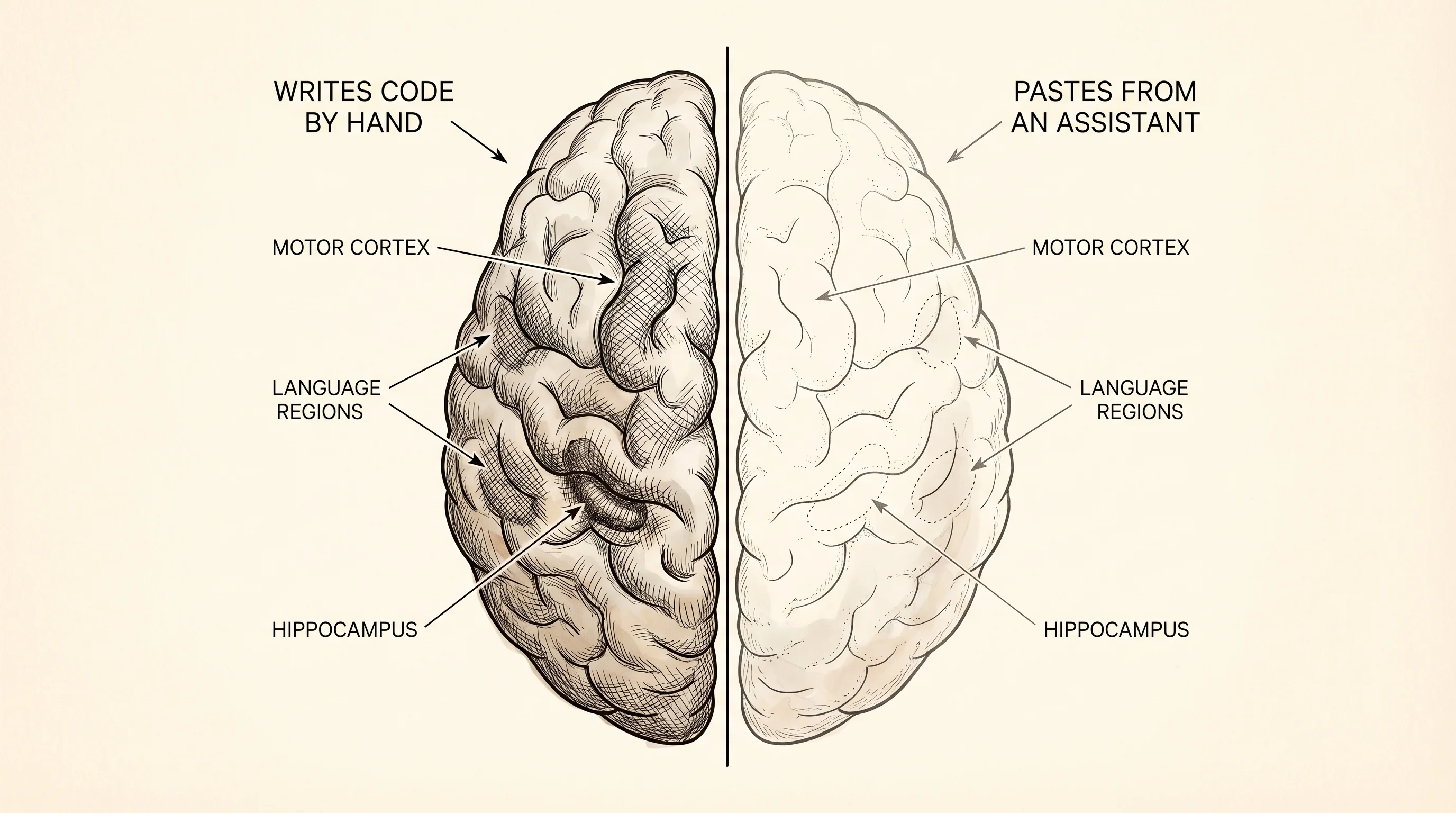
There is a contract for the rest of this site. Until you reach the page called chatbot, where we learn to talk to an LLM through code, you do not let an LLM write any code for you. Not a line. Not a suggestion you accept. Not a "fix this for me" on a bug you do not understand. You can read documentation. You can read Stack Overflow. You can ask a person. You cannot let the machine do the reps.
The reason is the hippocampus finding. You want the part of your brain that holds code to thicken the way the cab drivers' spatial memory thickened. That needs load. Every line you type is a rep. Every bug you chase by reading your own code is a set. The pump comes from you. Once you finish this site, you pick up any tool you want and you are the stronger one holding it.
You have agreed to the contract. The next question is why we are lifting in this particular gym — why Python, and not one of the thousand other languages.